
Tree services
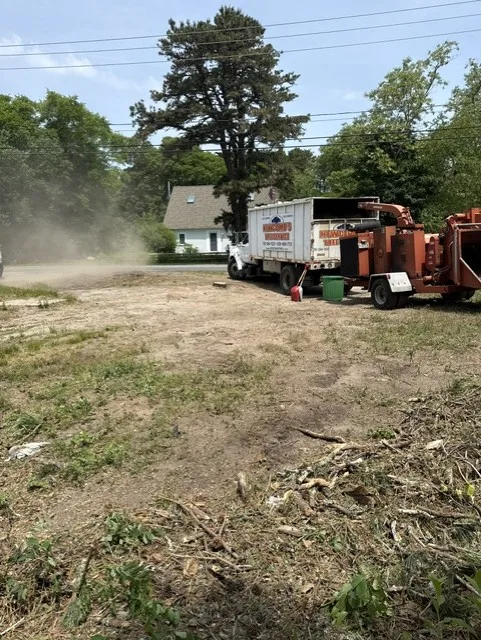
Commercial tree service covers scheduled maintenance, removals, lot clearing and storm response for properties that are not single homes. Newcomb's works for Cape Cod businesses, builders, HOAs and condo associations, property managers and municipalities that need dependable crews and clear paperwork.
Commercial properties need trees managed, not just cut when something breaks. Typical work includes pruning for clearance over parking lots, sidewalks, signs and light poles. Dead and declining trees are removed before they become a liability. Roadside and entrance sightlines are kept open. For builders, it means clearing a house lot or commercial pad to the limits on the plan, with stumps handled as the site contractor requires. For associations, it often means one consistent standard applied across dozens of units and shared common areas.
Work on an occupied site is planned around the people using it. The crew lead agrees on timing, staging areas and traffic control with your site contact beforehand. Cones and signs mark off the work zone, and parking spaces are cleared in sections so the whole lot is never closed. Scopes are written by area or by tree so boards and owners can approve them line by line. Certificates of insurance are provided on request, naming your company or association as needed. Crews use modern equipment and put safety first.
The Cape has a seasonal rhythm that affects commercial tree work. Retail lots, inns, restaurants and condo complexes are busiest from Memorial Day through Columbus Day, so major pruning and removals are best done in the quiet months. Pitch pines planted or left around parking areas drop limbs and decline as they age. Salt wind near the shore thins exposed plantings. Septic fields and drainage structures sit under many lawns and islands. Wetland buffers, historic districts and public shade tree rules can all apply to a single site.
You can expect a walkthrough, a written proposal broken out by area, and a schedule that fits your tenants or build timeline. Residents and tenants can be notified in advance using dates the crew commits to. During the work, your contact gets updates and is told about anything unexpected, such as a hazardous tree found on site. Afterward, lots and walks are cleaned to a standard fit for customers. Many clients then set up a recurring inspection and pruning cycle so budgets stay predictable.
How it works
From first call to clean yard
01
Site meeting
Meet with your manager, superintendent or board representative on the property. Priorities, access, hours and any town requirements are reviewed together.
02
Itemized proposal
You receive a free written proposal by area or tree, suitable for board or owner approval, along with insurance certificates if requested.
03
Scheduled work
Dates are confirmed so notices can go out. Crews set up work zones, complete the scope in agreed phases and keep your contact informed.
04
Closeout and planning
The site is cleaned and reviewed with you. Recommendations for the next season or budget year are provided so future work is no surprise.
Pricing
What affects the price
Scope and scale
A single hazardous tree behind a shop is a small job. A multi-building condo campus or a full construction lot is a multi-day project with more crew and trucks.
Scheduling constraints
Work limited to early mornings, off-season weeks or phases around tenants can take more mobilizations than an open schedule. Flexible timing generally lowers the overall cost.
Traffic and pedestrians
Sites that need lane closures, a flagger, police details or heavy pedestrian control require added people and coordination beyond the tree work itself.
Disposal and stumps
Builders may need stumps removed and all wood hauled. A maintenance client may only need chips taken away. The disposal plan is a real share of any commercial price.
Recurring versus one-time
Properties on a regular pruning cycle are in better shape at each visit, so each visit takes less time. A long-neglected site costs more to bring up to standard.
Reviews
What customers say
Isaiah is a young professional who’s already proven himself. He was quick to respond, worked hard, and left everything clean. I’d gladly hire him again.
Isaiah and his crew from Newcomb’s Tree Service of Cape Cod were outstanding. After the major storm this winter left me with significant tree damage, they stepped in and handled everything with true professionalism. They arrived right on time, worked efficiently, offered a great price, and left the property spotless.
Very professional staff, they came and gave us a free estimate. We contracted with them. One week later they returned to perform the work. After completing the work they cleaned the areas as if no work had been done. We couldn’t be happier with them.
Questions
Commercial & HOA Tree Service FAQ
Yes. Certificates of insurance are available on request before work is scheduled. Tell the office the exact name of the business, association or management company that should appear as certificate holder, and any wording your insurer or board requires. Ask at the proposal stage so the paperwork is in hand before the crew is on site.
It can. Work is commonly phased so parking lots stay partly open, done early in the day before stores open, or booked for the off-season when Cape properties are quiet. Dates are set far enough ahead for you to post notices and have vehicles moved. Tell the crew lead about any blackout dates up front.
Yes. Many associations prefer a recurring arrangement: a periodic walkthrough, a prioritized list of pruning and removals, and work spread across budget years. That keeps hazards from piling up and gives the board a predictable figure to plan around. Storm response for the property can be part of the same relationship.
Yes. Lot clearing is done to the limits of work on your site plan, with trees to remain flagged beforehand. Stumps can be ground or cut low, and wood and chips hauled off. Tell the estimator what your excavator expects to handle. Any Conservation Commission or town approvals should be in place before clearing starts.
Trees within the public way are generally public shade trees under the town tree warden, per Massachusetts General Laws Chapter 87. They cannot be cut or removed without the town's permission, even if they overhang your lot. Trees on your side of the line are yours to maintain. When the boundary is unclear, confirm it before authorizing work.
Ready for a free estimate?
Call or send a photo of the tree. You get the price before any work starts.